How to Calculate Fragrance Oil Load
In this guide, you’ll learn how to calculate fragrance oil for candles and recommended fragrance percentages for different waxes. Adding too little fragrance oil can result in a weak scent throw, while adding too much can cause issues such as sweating, poor burning, and fragrance separation. This is why it is important to understanding fragrance load percentages and always measure out your fragrance oil and wax.
Fragrance Load
Fragrance load refers to the percentage of fragrance oil added to your wax.
For example, if you’re making a candle with a total fill weight of 135 grams and want an 8% fragrance load, 8% of the total candle weight will be fragrance oil. The ideal fragrance load depends on the type of wax you’re using, as each wax has a different fragrance-holding capacity.
Recommended Fragrance Loads by Wax Type
Soy Wax
A fragrance load of 6%–10% is commonly used for soy wax candles. Over the years, I’ve found myself reaching for soy wax and soy-coconut blends time and time again, and these are the waxes I work with almost exclusively today.
- 6% provides a lighter scent
- 8% offers a balanced scent throw (this is what I use mostly)
- 10% creates a stronger fragrance
As with every aspect of candle making, testing is crucial. Not all fragrance oils perform the same, even when used at the same percentage. Some fragrances are naturally stronger and more concentrated, allowing you to achieve an excellent scent throw with a lower fragrance load than you would typically use. Others may be lighter or more delicate, requiring a slightly higher fragrance load to produce the desired scent strength.
By testing each fragrance individually, you can adjust the fragrance load as needed and create a more consistent scent experience across your entire candle collection. This not only helps optimize performance but can also reduce unnecessary fragrance usage and production costs.
Paraffin Wax
Recommended fragrance load:
6%–12%
Paraffin wax generally holds fragrance well and can often accommodate higher fragrance loads.
Coconut Wax
Recommended fragrance load:
8%–12%
Coconut wax is known for excellent scent throw and can typically handle higher fragrance percentages.
Beeswax
Recommended fragrance load:
3%–6%
However, many candle makers prefer to leave beeswax unscented. Beeswax naturally has a delicate honey scent and may interfere with certain fragrance oils.
Fragrance Oil Calculation Formula
Formula:
Total Fill Amount × Fragrance Oil Percentage (as a decimal) = Amount of Fragrance Oil Needed
Step 1: Determine Your Total Fill Weight
Your total fill weight is the amount of wax and fragrance that will fill your container.
For this example, we’ll use:
135 g total fill weight
Step 2: Choose Your Fragrance Load
Common fragrance loads include:
- 6%
- 8%
- 10%
- 12%
Convert the percentage into a decimal before calculating:
| Percentage | Decimal |
|---|---|
| 6% | 0.06 |
| 8% | 0.08 |
| 10% | 0.10 |
| 12% | 0.12 |
Step 3: Apply the Formula
Example 1: Using an 8% Fragrance Load
You decide to use an 8% fragrance load in a candle with a total fill weight of 135 g.
Calculation:
135 × 0.08 = 10.8 g
You will need:
- Fragrance oil: 10.8 g
- Wax: 124.2 g
Example 2: Using a 12% Fragrance Load
You decide to use a 12% fragrance load in a candle with a total fill weight of 135 g.
Calculation:
135 × 0.12 = 16.2 g
You will need:
- Fragrance oil: 16.2 g
- Wax: 118.8 g
Not a fan of doing the math manually?
Use this free fragrance oil load calculator to quickly determine exactly how much fragrance oil and wax you’ll need for your candle.
Fragrance Oil Calculator
Example Fragrance Oil Reference Chart
For a 135 g candle:
| Fragrance Load | Fragrance Oil Needed |
|---|---|
| 6% | 8.1 g |
| 8% | 10.8 g |
| 10% | 13.5 g |
| 12% | 16.2 g |
Tips for a Better Scent Throw
Choosing the right fragrance load is only one part of making strongly scented candles. The quality of your fragrance oil, the type of wax you use, proper curing, and thorough testing all play an equally important role. Here are a few simple tips that will help you achieve more consistent results.
Measure Everything by Weight
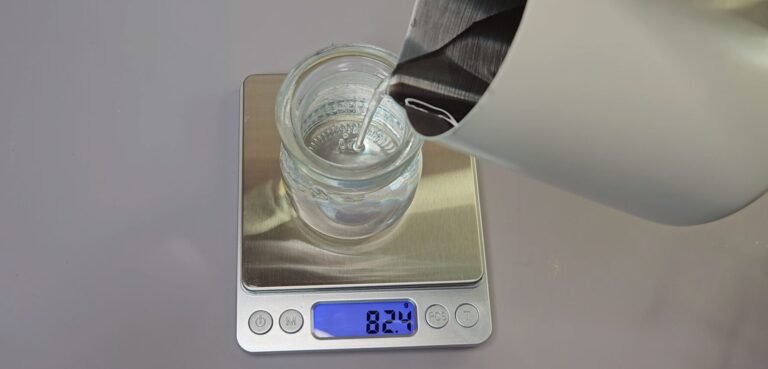
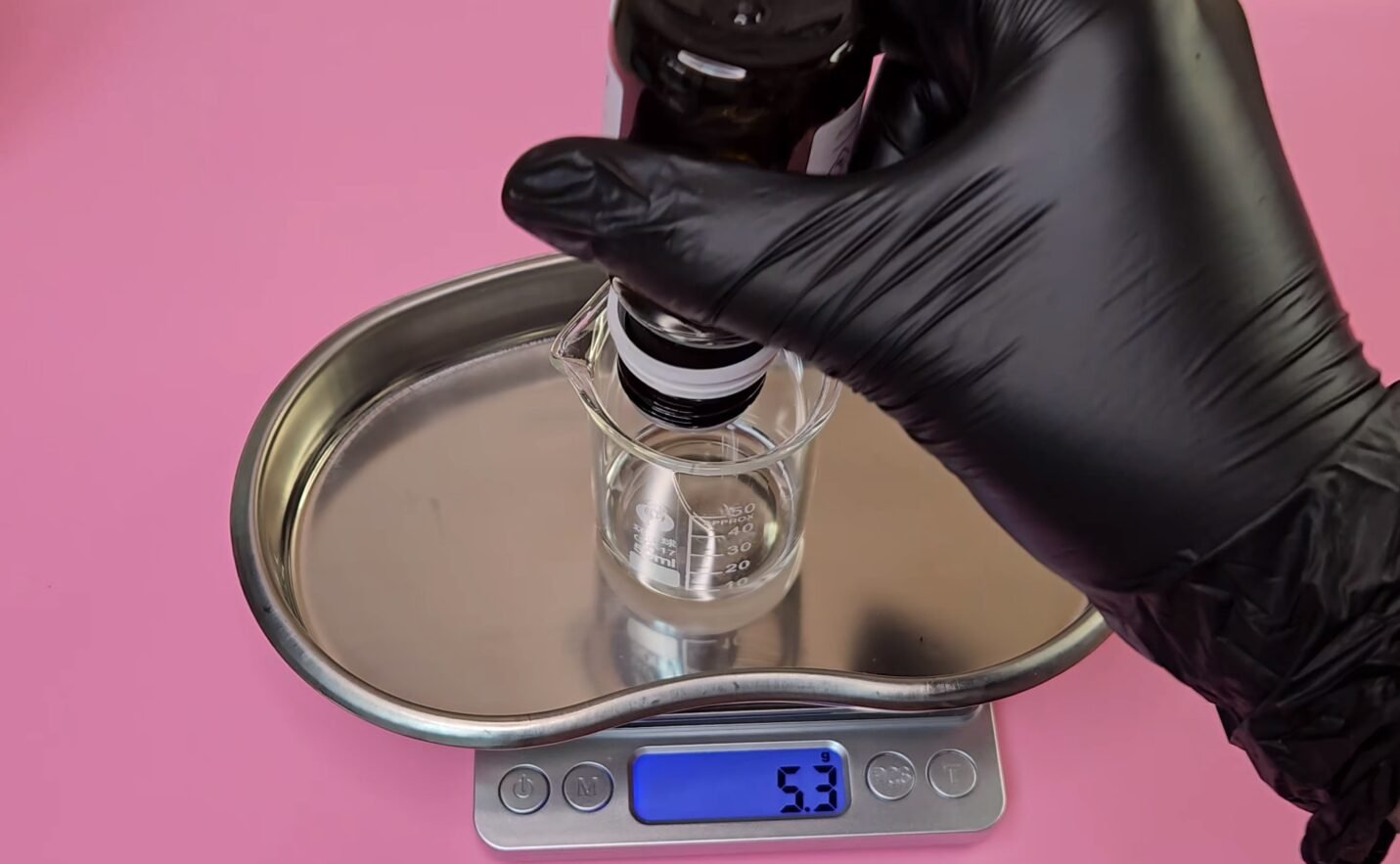
Always use a precise digital scale when measuring both wax and fragrance oil. Measuring by volume is much less accurate because different fragrance oils have different densities.
Follow the Wax Manufacturer’s Recommendations
Every wax has a maximum fragrance load that it can safely hold. Adding more fragrance than recommended doesn’t necessarily produce a stronger scent. In fact, it can cause fragrance oil to separate from the wax, create wet spots, interfere with proper burning, or lead to excessive soot.
Test Before Making Large Batches
If there’s one lesson every candle maker learns, it’s this: test, test, test. Even if two fragrance oils have the same recommended usage rate, they can behave very differently. Some fragrances produce an excellent hot throw at 6%, while others perform better at 8% or even 10%.
Testing small batches first saves both your time and money.
Keep Good Notes
Whenever you test a new candle, write down the wax type, fragrance oil, fragrance percentage, wick size, pouring temperature, and curing time. It may seem unnecessary at first, but having detailed notes makes it much easier to reproduce candles that perform well and troubleshoot those that don’t.
What Causes Fragrance Oil to Separate?
Sometimes, even when you follow every recommendation, problems can still occur. One of the issues I encountered most often is fragrance oil separation, where small pools or droplets of oil would appear on the surface of my candle or inside the wax.
There are several possible causes of this. The most common is simply using more fragrance oil than the wax can hold. Once the wax reaches its maximum fragrance capacity, the excess oil has nowhere to go and may begin to seep out.
Another possible cause is using low-quality fragrance oils or oils that were never intended for candle making. For example, some oils formulated for reed diffusers contain solvents that work well in diffuser systems but do not bind properly with candle wax.
Old fragrance oils can also contribute to separation. Although most fragrance oils remain usable for one to two years when stored correctly, exposure to air, sunlight, and frequent temperature changes gradually causes oxidation. As the fragrance ages, some ingredients can separate or degrade, affecting both scent quality and how well the fragrance oil blends with wax.
To help prevent this, store your fragrance oils in tightly sealed bottles in a cool, dry place away from direct sunlight. It’s also good to use older fragrance oils before opening new bottles. Many candle makers (myself included) enjoy testing new scents, and it’s easy to end up with half-used bottles sitting on the shelf for months. Rotating your fragrance inventory helps reduce waste and ensures you’re always working with oils at their best.
Summary
Learning how to calculate fragrance oil correctly is one of the most important skills every candle maker should master. Remember that there isn’t one perfect fragrance percentage that works for every candle. The ideal fragrance load depends on your wax, fragrance oil, wick, and even the type of candle you’re making. Start within the manufacturer’s recommended range, make small test batches, and keep detailed notes. Over time, you’ll discover the combinations that give you the best cold throw, hot throw, and burn performance.
If you’re unsure how much fragrance oil to use, try my Free Fragrance Oil Calculator, which instantly calculates the exact amount of wax and fragrance oil you need for your candle.