Candle wax types – Which candle wax do I need?
This is one of the most fun parts of candle making – choosing your wax. With so many different types available, it’s easy to feel overwhelmed at first. Soy, paraffin, beeswax, coconut, rapeseed, palm, gel wax, and various wax blends all have different properties, melting points, and best uses.
Every wax has its own advantages. Some create smooth tops and excellent scent throw, while others produce beautiful crystal patterns or are firm enough to stand on their own without a container. Understanding these differences will help you avoid common beginner mistakes and achieve better-looking candles with less frustration.
If you plan to sell your candles at some point, you will want perfect, repeatable results every time. This will take a lot of testing (and patience) but in the end you will find the wax that works for you.
This is a simplified, quick guide and serves as introduction into candle wax types for beginners.
Depending on what type of candle you want to make, you will need to choose a suitable type of wax. Candle wax can be divided into two main categories: container wax and pillar wax. There is also wax for wax melts which is often closer to pillar wax in terms of its melting point, so some manufacturers sell the same wax type for pillar candles and wax melts.
Container wax
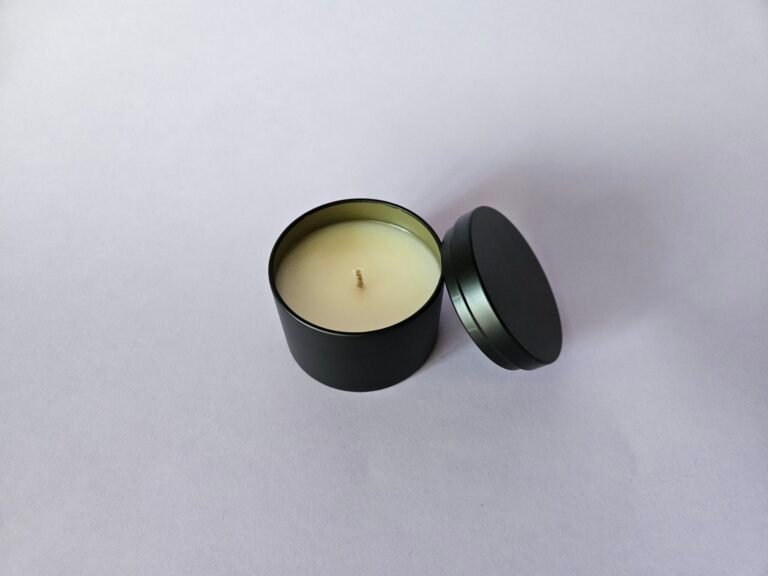
Container wax is used when your final product stays in a container. This is the most common type of candle. You would choose your candle vessel/container, such as a glass jar, tin, or a ceramic cup, and pour wax into the container. Container wax has a lower melting point than pillar wax and melt wax. It is not suitable to be used with molds because it is too soft and it would not hold shape or ensure a long burn in pillar candles. Container wax is also used to make whipped wax. Read more about how to whip wax here.
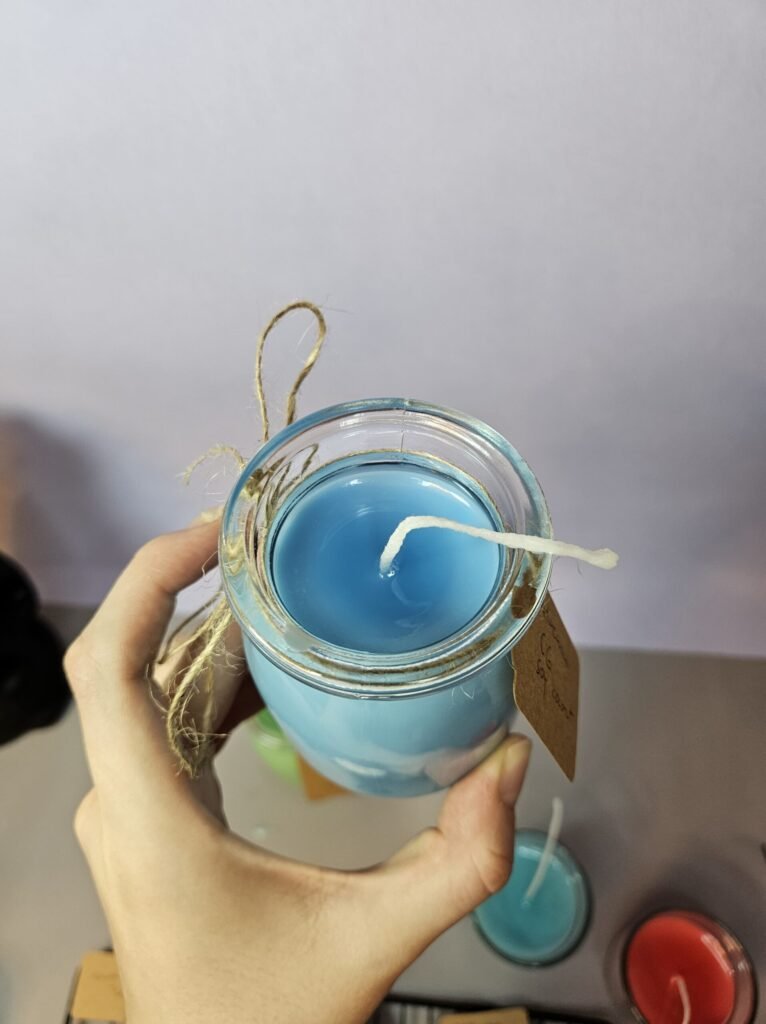
The most popular container waxes are soy and paraffin wax as well as soy-paraffin blends. Other options are coconut wax, rapeseed wax, and gel wax. One of the best-known container soy waxes is Golden Wax 464, which gives you a smooth finish and almost no frosting (this is also my favorite container wax). You do not need to order wax from the other side of the world. Look up candle supply stores in your area and order a few small packages from each wax they sell. Test out all waxes to figure out which one you like the best before ordering a large quantity.
Pillar wax
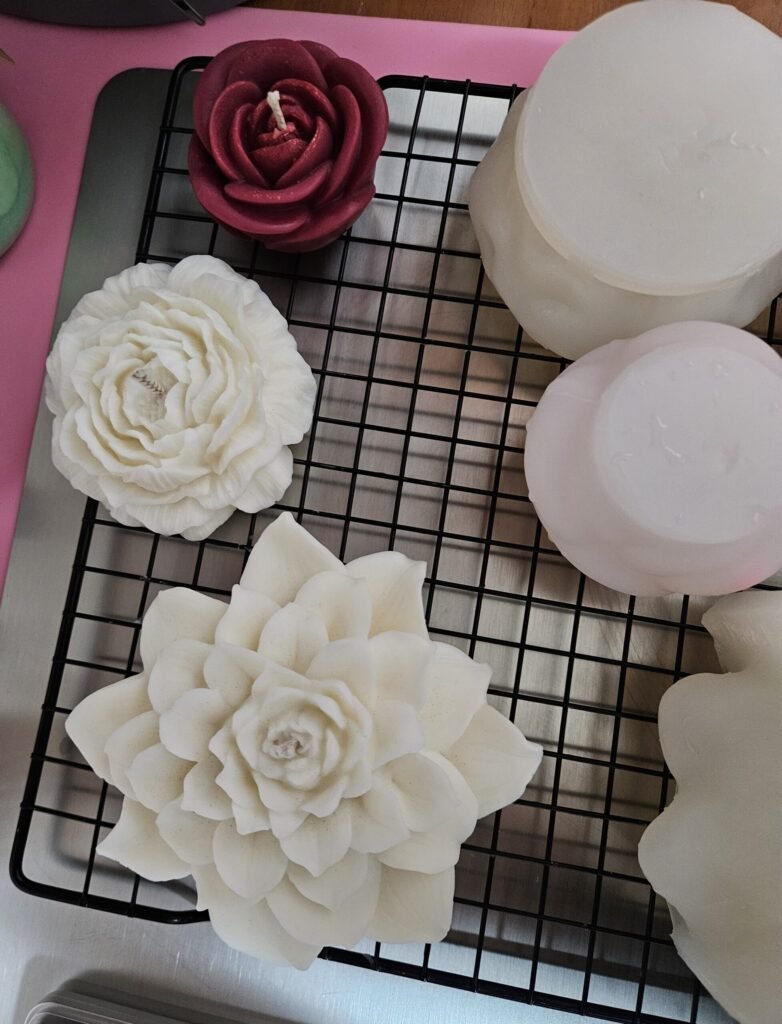
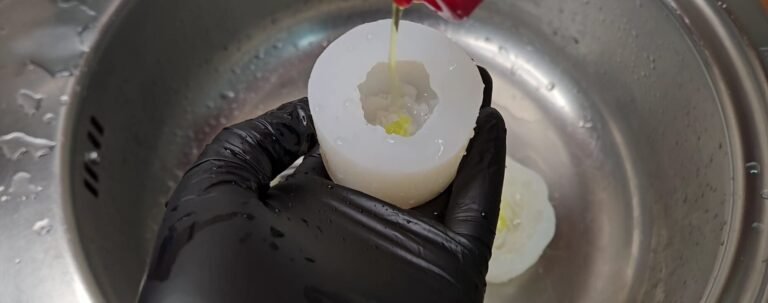
Pillar wax is used for candles made with molds. It has a higher melting point than container or melt wax. It is used for free-standing candles such as these flowers.
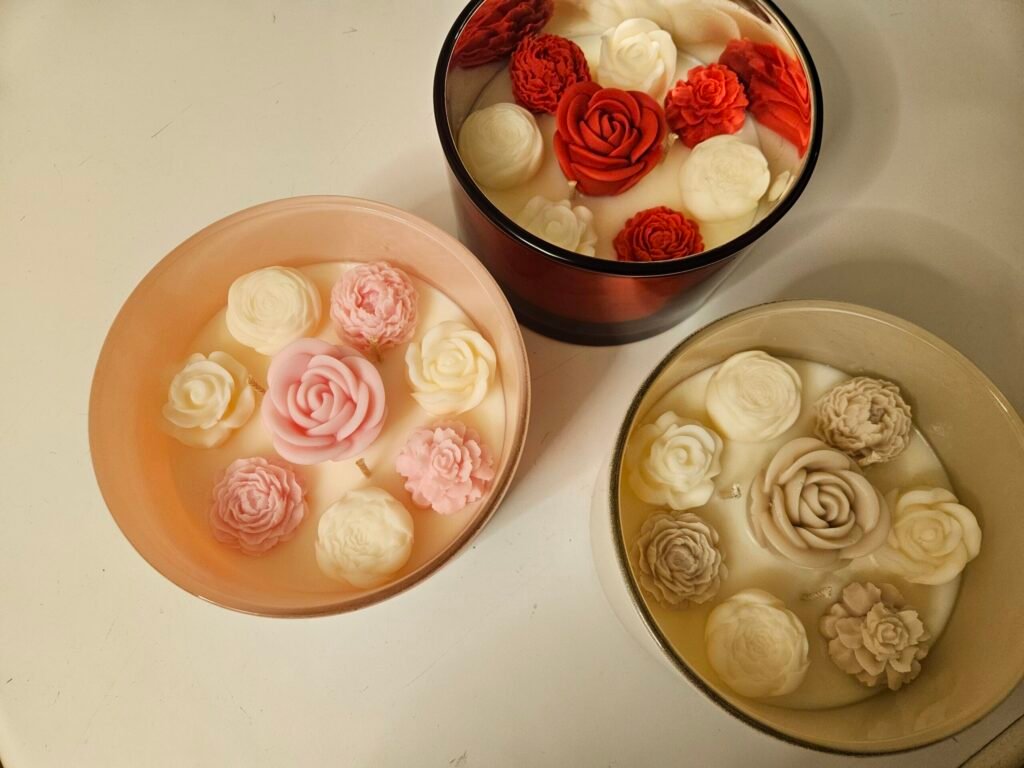
This is an example of a combination of pillar wax used for flowers and container wax, used to fill the glass container.
Wax for melts
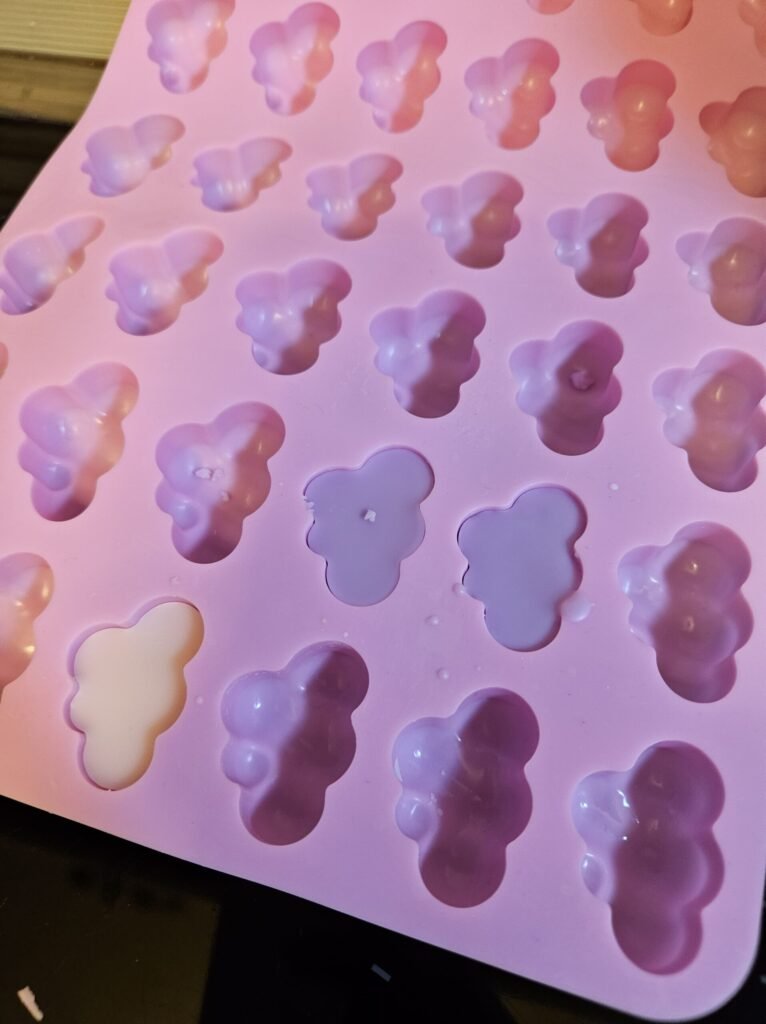
Melt wax is closer to pillar wax in terms of its melting point and consistency in the final product. Melt wax can be poured into wax melt clamshells or silicone/plastic molds (such as these clouds in the picture).
Some manufacturers sell the same wax for both pillar candles and wax melts. It is best to always check the manufacturer’s directions for intended usage and do your own testing.
Which Wax Should Beginners Choose?
If you’re completely new to candle making, you’ll want to pick the wax is the easiest to work with. Although every candle maker has different preferences, there are a few options that are especially beginner-friendly in my opinion.
1. Soy wax
Soy wax is the wax that most beginners start out with. Why? If you decided to make candles yourself, you probably are looking for something more special and natural than paraffin wax that you can find in every store for a few bucks. Soy wax burns cleanly and has become one of the most popular candle waxes in the world. The downside is that soy wax can sometimes develop frosting (white crystal-like marks on the surface), and it may require more testing to achieve the perfect finish. Nevertheless, it is a more natural and “healthier” option than paraffin.
2. Paraffin wax
Paraffin wax is another excellent choice, especially if your goal is to create smooth-looking candles with a strong scent throw. This is the wax that beginners may turn to after getting frustrated with uneven tops and frosting issues that are common with soy wax. It is generally very forgiving and produces consistent results, making it a favorite among many professional candle makers. If appearance and fragrance performance are your top priorities, paraffin is hard to beat.
3. Soy-paraffin blends
A soy and paraffin wax blend is probably one of the best options for beginners. It combines many of the advantages of both waxes. You get the easier handling and smooth finish of paraffin together with many of the characteristics people like about soy wax. Many candle makers eventually settle on a blend because it offers reliable, repeatable results without some of the common frustrations of using pure soy wax (I was too stubborn so I sticked to soy from the very beginning despite many “aesthetic” issues).
A Quick Look at Other Wax Types
Beeswax
Beeswax is a natural wax produced by honeybees. It has a subtle honey aroma and burns slowly with a warm golden glow. Since it is naturally harder than soy wax, it is commonly used for pillars, tapers, and handmade flower candles (where you shape each leaf by hand).
Coconut Wax
Coconut wax is a soft, creamy wax made from coconut oil. It burns cleanly and often provides excellent fragrance throw, but it is rarely used on its own. Most manufacturers blend it with soy or paraffin to improve its performance and make it easier to work with.
Gel Wax
Gel wax isn’t actually a wax at all but a transparent mineral oil-based gel. It allows candle makers to create decorative candles with embedded shells, stones, or other decorations inside. These types of candles are usually used only for decorative purposes.
Palm Wax
Palm wax is known for creating beautiful crystal and feather-like patterns as it cools. It is very firm, which makes it a great choice for pillar candles. Choose this wax if you want to achieve unique decorative finishes without additional techniques.
Rapeseed Wax
Rapeseed wax has become increasingly popular because it is a renewable plant-based wax that burns cleanly and performs well in container candles. It also requires less curing time than soy wax, making it a great choice if you want to start using or shipping your candles as soon as possible.
Sunflower Wax
Sunflower wax is another plant-based wax that is naturally hard and works well in blends or decorative candles. Although it is less common than soy or paraffin, it has gained popularity among makers looking for alternative natural waxes.
Wax Blends
Many manufacturers create custom wax blends that combine two or more waxes, such as soy and paraffin or soy and coconut. These blends are designed to improve scent throw, reduce frosting, create smoother tops, or make candles easier and cheaper to manufacture.
Here are the most common candle waxes and their melting points:
- Soy wax 46 °C – 52 °C (115 °F – 125 °F)
- Paraffin wax 54°C – 66°C ( 130°F – 150°F)
- Beeswax 62°C – 64°C (144°F – 147°F)
- Coconut wax 38°C – 46°C (100°F – 115°F)
- Gel wax 93°C – 125°C (200°F – 257°F)
- Palm wax 54-63°C (130-145°F)
- Rapeseed wax 35°C – 50°C (95°F – 122°F)
- Sunflower wax 74°C – 80°C (165°F – 176°F)
- Wax blends such as a soy-paraffin blend.
A general guide for pouring temperature and when to add fragrance oil:
Soy wax
- Add fragrance at 79-85°C (175-185°F)
- pouring temperature: 57°C – 63°C (135°F – 145°F)
Paraffin wax
- Add fragrance at 77-90°C (170-195°F)
- pouring temperature: 79°C – 85°C (175°F – 185°F)
Beeswax
- Add fragrance at 71-79°C (160-17°F)
- pouring temperature: 74°C – 79°C (165°F – 175°F)
Coconut wax
- Add fragrance at 54-82°C (130-180°F)
- pouring temperature: 49°C – 60°C (120°F – 140°F)
Gel wax
- Add fragrance at 71-76°C (160-170°F)
- pouring temperature: 85-95°C (185-200°F)
Palm wax
- Add fragrance at 82-93°C (180-200°F)
- pouring temperature: 88-99°C (190-210°F)
Rapeseed wax
- Add fragrance at 55-65°C (130-150°F)
- pouring temperature: 45-60°C (113- 140°F)
Sunflower wax
- Add fragrance at 77-85°C (170-185°F)
- pouring temperature: 76-79°C (170-175°F)
Summary
Choosing the right candle wax may seem confusing at first, but it becomes much easier once you understand the difference between container wax, pillar wax, and wax for melts. If you’re just starting out, a quality soy wax, paraffin wax, or soy-paraffin blend is usually the best place to begin. From there, you can experiment with other waxes to see which one suits you best.
Remember that there is no single “best” candle wax. The perfect wax depends on the type of candle you’re making, the fragrance oils and wicks you use, and the results you want to achieve. Every experienced candle maker has spent time testing different combinations, so don’t be discouraged if your first few candles aren’t perfect. Testing, taking notes, and making small adjustments will help you develop candles that burn beautifully, smell amazing, and look exactly the way you envisioned.